AeroLink Intelligent Network System: Integrating AI and IoT for Enhanced Airport Cybernetics
Keywords:
Airport cybernetics, artificial intelligence, light fidelity, internet of things, radio frequency, LiDAR, cybersecurityAbstract
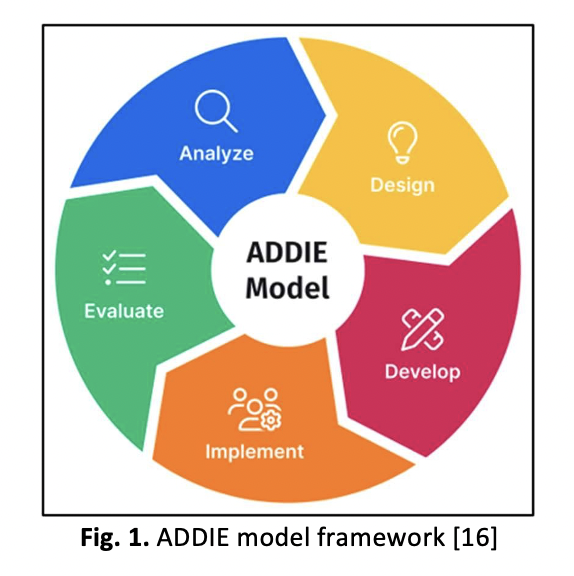
The aviation industry is undergoing a rapid digital transformation driven by integrated cyber-physical systems, yet modern airport cybernetics remains severely hindered by physical scalability constraints in traditional wired networks, communication disruptions, and escalating cybersecurity threats. Objective: While prior research has investigated these vulnerabilities in isolation, this study introduces the AeroLink Intelligent Network System, which integrates five core technologies to simultaneously enhance communication reliability, infrastructure scalability, and cybersecurity resilience. Method: Following the structured ADDIE development model, a hybrid physical prototype integrating Radio Frequency (RF), LiFi-inspired communication, Artificial Intelligence (AI), Internet of Things (IoT), and LiDAR-like detection was constructed and evaluated in a miniature airport diorama. Concurrently, a five-point Likert scale questionnaire was administered to airport stakeholders, yielding 544 valid responses for descriptive, reliability, correlation, and multiple regression analyses in SPSS. Results: Physical trials demonstrated that all technologies functioned successfully, with average response times of 2.00 seconds for RF, 2.26 seconds for LiDAR-like detection, 2.44 seconds for AI, 2.67 seconds for IoT, and 3.60 seconds for LiFi-inspired communication. The multiple linear regression model was highly significant, explaining 76.6 percent of the variance in airport cybernetics (R-squared = 0.766, p < 0.001), with cyberattack risk identified as the strongest predictor (Beta = 0.638, p < 0.001), followed by communication interference (Beta = 0.158, p = 0.001) and scalability limitations (Beta = 0.113, p = 0.028). Conclusion: These findings validate the AeroLink framework as an effective cohesive architecture capable of advancing intelligent airport operations by strengthening cybersecurity, network scalability, and communication reliability.