A GPT-Based Applied Computing System for Interpretable OBD-II Vehicle Diagnostics and Safe Driving Support
Keywords:
OBD-II diagnostics, applied computing system, GPT-based interpretation, crossplatform mobile application, safe driving supportAbstract
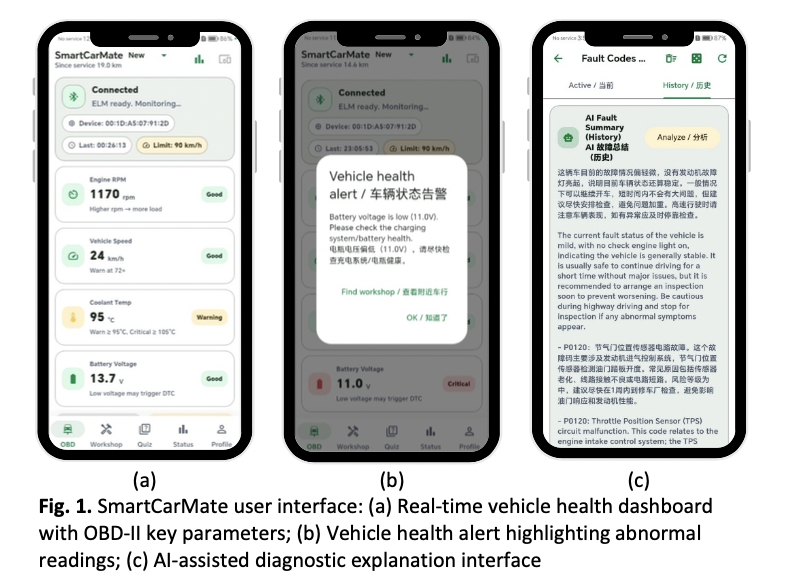
Modern vehicles are equipped with On-Board Diagnostics (OBD-II) systems that continuously generate data on engine performance, emissions, and driving behaviour. However, most OBD-II applications present diagnostic information in technical formats intended for automotive professionals, limiting interpretability for non-technical drivers. As a result, fault codes and warning alerts are often misunderstood or ignored, leading to delayed maintenance, unsafe driving practices, and increased vehicle ownership costs. This study proposes SmartCarMate, a GPT-based cross-platform applied computing system designed to enhance the accessibility and interpretability of OBD-II diagnostics while promoting safer driving behaviour. The system integrates realtime OBD-II data acquisition via a Bluetooth adapter with an AI-assisted interpretation layer that translates fault codes and sensor readings into human-readable explanations accompanied by prioritised action guidance. Additional features include driving behaviour analysis, trip tracking, maintenance reminders, and safety-oriented feedback to support preventive vehicle care. SmartCarMate was implemented as a cross-platform mobile application using the Flutter framework and evaluated through User Acceptance Testing involving drivers with varying automotive knowledge. Evaluation methods included task-based testing and a five-point Likert-scale questionnaire assessing usability, clarity, trust, and intention to continue use. Results indicate consistently high user acceptance (μ > 3.9), improved understanding of diagnostic alerts, and increased confidence in maintenance decisions, demonstrating that AI-assisted interpretation enhances usability and decision support in vehicle health monitoring systems.