Smart Urban Farming: Integrating Greenhouse, Aquaponics and IoT for Sustainable Agriculture
Keywords:
Aquaponics, greenhouse automation, Internet of Things (IoT), smart farming, sustainable agricultureAbstract
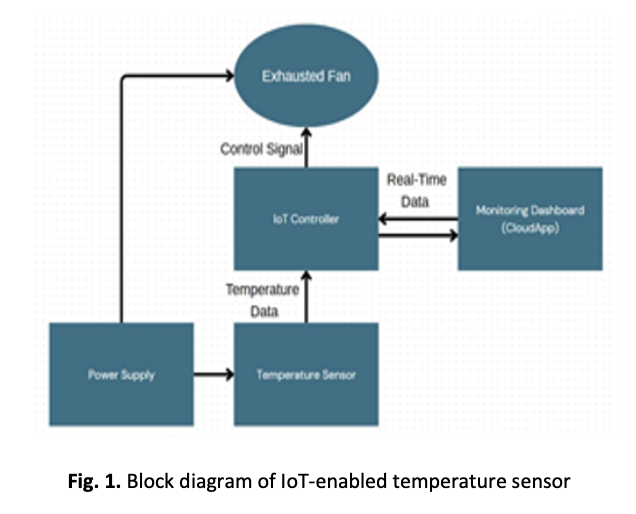
This project presents the development of a smart urban farming system that integrates greenhouse, aquaponics, and Internet of Things (IoT) technologies to promote sustainable agriculture. The system leverages IoT-enabled sensors to monitor critical environmental parameters, specifically temperature and water pH, with automated control mechanisms such as exhaust fan activation and solenoid valve response to maintain optimal growing conditions. Over a 31-day period, the system-maintained temperature stability during low-light hours but faced thermal challenges during midday, with peak values reaching 40.32 °C—exceeding the recommended threshold for aquatic life. Despite this, real-time control strategies reduced energy consumption to approximately 2.02 kWh/day, achieving a reduction of 8.5 to 12.8 times in energy usage per square foot compared to conventional greenhouses. Water pH remained mostly within tolerable levels, with values ranging from 6.82 to 8.41, and the solenoid valve system enabled responsive correction during deviations. Tilapia growth data over 9 weeks showed strong performance, with a percent weight gain of 1083.69%, a specific growth rate (SGR) of 3.92%/day, and a feed conversion ratio (FCR) of 1.12, indicating efficient biomass conversion and robust system support. These results demonstrate the system’s capability to improve productivity while reducing energy consumption and manual labour. The integration of automation and environmental monitoring validates the potential of smart farming systems to address urban sustainability goals and contribute to global targets such as food security, clean energy, and climate action.